Case studies from World Economic Forum Lighthouse facilities highlight what is achievable when operational excellence meets high level quality maturity and process control:
- Dr. Reddy’s Laboratories: Reduced quality deviations by 52%.
- AstraZeneca: Cut rework hours by 99.4%.
- Agilent Technologies: Decreased the Cost of Poor Quality (CoPQ) by 19%.

Despite these proven benchmarks, the reality across the broader pharmaceutical manufacturing landscape remains stark. The majority of facilities still rely heavily on legacy, reactive quality systems. This reliance on post-execution testing leads to elevated scrap rates, persistent hold time violations, high compliance risks, and costly release delays.
Bridging this gap requires moving beyond theoretical compliance. This article provides a practical roadmap for operationalizing Quality by Design (QbD) in pharma manufacturing. Beyond defining core concepts, we examine how to translate risk-based quality management onto the shop floor using Pharma 4.0 tools to achieve world class manufacturing in pharma.
What is Quality by Design in Pharma Manufacturing
Quality by Design (QbD) is a systematic, science- and risk-based approach to pharmaceutical development and manufacturing. It was formally established within the pharmaceutical development framework through ICH guidelines, particularly ICH Q8(R2). QbD shifts the manufacturing paradigm from empirical testing toward a deeper understanding of products, processes, and the relationship between them.
Rather than relying on end-product testing to reject off-spec batches, QbD embeds quality into the manufacturing process from day one. It establishes that product quality cannot be tested into a batch; it must be built by design.

Proactive vs. Reactive Quality Control
The fundamental shift between traditional pharmaceutical quality systems and modern QbD lies in the execution model:

Reactive Quality Control (Traditional)
- Relies heavily on post-batch quality control laboratory testing and end-product release analysis.
- Treats process variability as an unpredictable event, leading to frequent non-conformances, extensive root-cause investigations, and high batch scrap rates.
- Relies on predefined manufacturing parameters where process deviations can trigger investigations, corrective actions, or formal change control depending on their nature and impact.
Proactive Quality Control (QbD-Driven)
- Uses real-time process monitoring and quality controls during manufacturing to detect and address variability before it results in a quality failure.
- Anticipates process variability and controls it within a predefined design space to ensure batch consistency.
- Focuses quality engineering efforts on prevention, helping reduce deviation investigations, hold-time violations, and post-production rework.
The Core Pillars: QTPP, CQAs, and CPPs
Operationalizing QbD requires cascading product clinical requirements directly into shop-floor parameter controls. This line of sight connects three core elements:

Quality Target Product Profile
QTPP defines the prospective summary of the quality characteristics that a drug product should possess to ensure its desired quality, taking into account factors such as safety and efficacy.
Key elements of a QTPP include:
- Intended clinical use, dosage form, and delivery system.
- Route of administration and strength.
- Target release criteria (e.g., dissolution profile, stability specifications, and bioavailability).
Critical Quality Attributes
CQA is a physical, chemical, biological, or microbiological property or characteristic that must fall within an appropriate limit, range, or distribution to ensure the desired product quality. CQAs are directly derived from the QTPP.
Examples of CQAs across common dosage forms include:
- Solid Oral Dosage: Assay/potency, content uniformity, dissolution rate, impurity levels, and tablet hardness.
- Injectables / Biologics: Sterility, endotoxin levels, particulate matter, pH, and protein aggregation.
Critical Process Parameters
CPP is a manufacturing process variable whose variability has a direct impact on a CQA. CPPs must be monitored and controlled to ensure the process produces the desired quality output.
Examples of CPPs across unit operations include:
- Granulation & Drying: Impeller speed, binder addition rate, inlet air temperature, and endpoint moisture content.
- Bioreactor Operations: pH, dissolved oxygen (DO), agitation rate, temperature, and feed rate.
Risk-Based Quality Management in Action
At the core of QbD is risk-based quality management, which utilizes structured tools—such as Failure Mode and Effects Analysis (FMEA), Hazard Analysis Critical Control Points (HACCP), and Risk Ranking and Filtering—to identify which variables pose the greatest threat to product quality.
In practice, risk assessment defines the relationship between process inputs and outputs:
- Identification: Mapping every process step to identify raw material attributes and process variables that could affect CQAs.
- Prioritization: Evaluating failure modes based on severity, occurrence, and detectability to distinguish critical parameters (CPPs) from non-critical process variables.
- Control Strategy: Establishing a Design Space; the multidimensional combination and interaction of input variables and process parameters that have been demonstrated to provide assurance of quality. Operation within an approved design space is generally not considered a change requiring regulatory submission, providing manufacturers with greater operational flexibility.

How to Translate Quality by Design into Shop Floor Controls
QbD principles must become active, daily guardrails on the manufacturing floor. Translating high-level risk assessments into shop-floor execution requires converting quality requirements and process knowledge into enforced, real-time operating boundaries that guide operator behavior and system responses.
Defining Validated Operating Windows
Operationalizing QbD on the shop floor begins with establishing clear operational boundaries derived from design space studies. Rather than relying on a single static target, modern process execution operates across hierarchical control levels:
- Design Space (DS): The multidimensional combination and interaction of input variables (e.g., material attributes) and process parameters demonstrated during development to provide assurance of quality.
- Normal Operating Range (NOR): The tighter, routine operational boundary maintained by production teams to keep the process comfortably within the Design Space, accounting for minor equipment fluctuations.
- Proven Acceptable Range (PAR): The established range of a process parameter within which the process has been demonstrated to consistently produce product meeting the relevant quality requirements.

By mapping NORs directly inside execution systems, operators no longer guess if a slight drift in temperature or mixing speed threatens product quality—the system defines exact boundaries for immediate correction.
Risk Assessment Methods
To keep shop-floor execution efficient, quality teams cannot treat every parameter as critical. Structured risk assessments categorize and prioritize process variables so controls focus where they matter most:
- Failure Mode and Effects Analysis (FMEA): Evaluates potential process failure modes based on severity, occurrence, and detectability (Risk Priority Number – RPN). High-RPN steps automatically earn automated shop-floor verification controls.
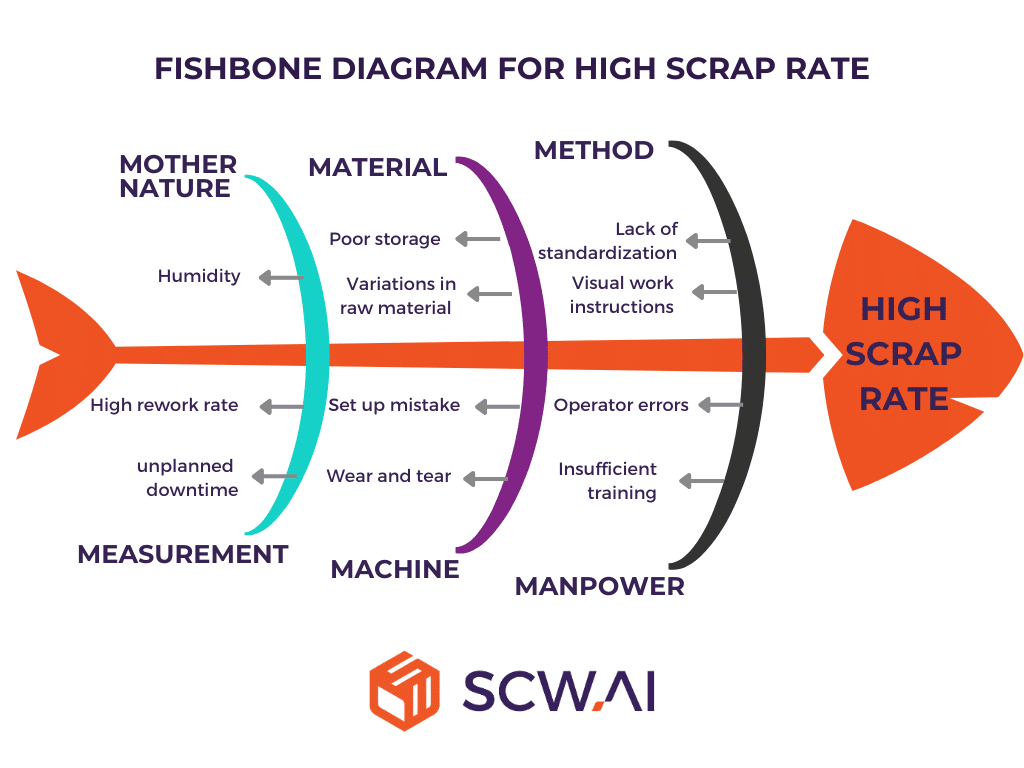
- Ishikawa (Fishbone) Diagram: Map interactions between the 6M inputs and specific CQAs to identify potential sources of variability and candidate CPPs.
- Hazard Analysis Critical Control Points (HACCP): Identifies physical, chemical, and microbiological hazards and establishes critical control points where monitoring and intervention are required to prevent or reduce risks to product quality.
Statistical Process Control (SPC) and Data-Backed Mechanisms
Implementing Statistical Process Control (SPC) allows manufacturers to detect process shifts before parameters breach validated operating windows:
- Control Charts: Monitor process data against statistically determined Upper and Lower Control Limits (UCL/LCL) to identify abnormal variation and potential process shifts.
- Trend Analysis: Algorithms identify non-random patterns, such as sustained upward or downward trends, to detect potential equipment wear, raw material variability, or sensor drift before the process moves outside established control limits.
- In-Line Process Analytical Technology (PAT): In-line or online sensors provide continuous measurements such as moisture, concentration, or other process attributes that can feed real-time monitoring and control systems, reducing reliance on certain offline measurements.

Automating Rule Enforcement at the Point of Execution
Modern shop-floor controls enforce QbD rules programmatically at the exact moment of action:
- Interlocking Equipment Parameters: PLC/SCADA integrations can automatically pause or restrict execution and alert personnel when a critical process parameter moves outside predefined operating limits, according to the validated control strategy.
- Mandatory Error-Proofing (Poka-Yoke): Digital workflows block operators from advancing to the next step until prerequisite conditions—such as equipment cleaning validation, calibration checks, or raw material verification—are met.
- Automated Hold Time Violation Prevention: System timers track in-process hold times across intermediate stages (e.g., wet massing or core tablet holding), alerting operators and triggering automated escalation workflows prior to exceeding validated limits.
Top 4 Benefits of Quality by Design
By shifting quality management from reactive end-product testing toward proactive process control, pharmaceutical organizations can unlock measurable improvements across manufacturing performance, compliance, and labor efficiency.

Maximized First-Pass Yield & Batch Quality
Proactive control within an established Design Space can reduce batch-to-batch variability. By continuously monitoring CPPs and maintaining parameters within defined operating ranges, manufacturers can improve process consistency and increase the likelihood that each unit operation produces output meeting the required CQAs. This real-time precision elevates first-pass yield, reduces the need for rework cycles, and ensures consistent product quality from lot to lot.
Reduced Cost of Poor Quality and Scrap Rates
In traditional pharmaceutical manufacturing, detecting an out-of-specification (OOS) result during final testing can result in extensive investigations, rework, or batch rejection; potentially leading to significant material and production losses. QbD directly addresses the Cost of Poor Quality through structural prevention.
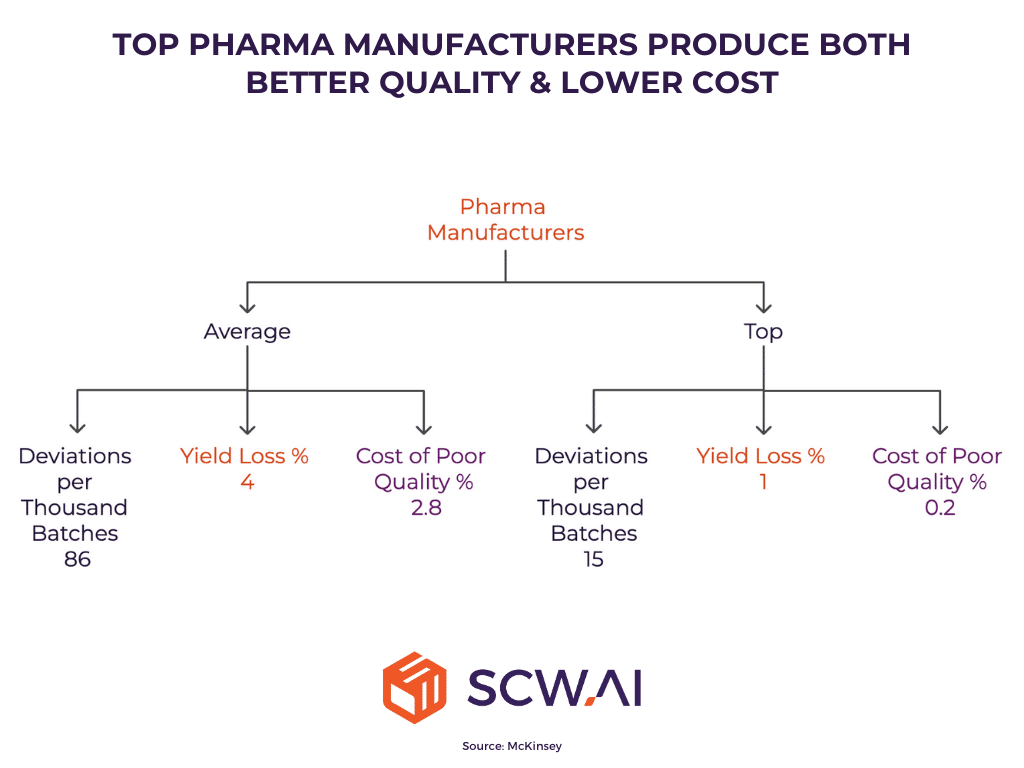
According to McKinsey, pharmaceutical manufacturers adopting these principles have achieved up to a 14-fold reduction in rework and waste costs, driven by deviation rates dropping to as low as one to six deviations per 1,000 batches.
Streamlines Regulatory Compliance
Regulatory frameworks from agencies such as the FDA, EMA, and PMDA support science- and risk-based approaches to pharmaceutical development and manufacturing. QbD provides a structured way to demonstrate process understanding, identify critical quality risks, and establish an appropriate control strategy. Furthermore, operating within an approved Design Space grants manufacturers the regulatory flexibility to optimize process parameters without triggering time-consuming post-approval filings or change control delays.
Reduce Manual and Repetitive Quality Tasks
Transitioning to paperless quality solutions operationalizes QbD directly into daily workflows:
- Automated Data Capture: Direct integration with equipment and sensors eliminates manual transcription steps and double-check signatures.
- Review by Exception: Systems automatically identify predefined exceptions, deviations, and abnormal process conditions, allowing QA personnel to focus their review on records and events that require attention rather than manually reviewing every compliant data point.
- Accelerated Batch Release: Case studies demonstrate that implementing paperless quality solutions reduces GMP reporting and batch review times by up to 85%, drastically shortening market release cycles.

Operationalizing QbD with Industry 4.0 Tools
Translating Quality by Design principles into everyday shop-floor operations requires a digital execution architecture. A pharma factory’s digital ecosystem connects hardware, software, and analytical algorithms to ensure that validated process controls are consistently monitored and, where appropriate, automatically enforced throughout production.

Digital Logbooks: Enforcing Error-Proofing Data Entry and Smart Rules
Traditional paper logbooks introduce human error, transcription delays, and data integrity vulnerabilities. A pharma digital logbook supports QbD by embedding data integrity controls directly into routine record-keeping and execution workflows.

- Data Quality by Design (ALCOA+ Adherence): Digital logbooks ensure data ALCOA+ compliant by default. Integrated smart-form functionality can perform calculations automatically, reducing manual calculations and the associated risk of transcription or calculation errors. Direct connections to equipment sensors and shop-floor instruments can automatically capture structured data and feed it into Statistical Process Control engines for continuous analysis.
- Real-Time State Tracking & GMP Compliance: Digital logbooks provide full real-time visibility into the exact operational status of rooms, assets, and cleanroom environments across the facility, ensuring strict adherence to GMP compliance standards.
- Context-Aware Smart Rules: Manufacturers can enforce deterministic logic for assets, cleanrooms, and personnel. For example, a smart rule can automatically update a room’s status to “Dirty” after a specified processing time or batch completion, rendering the room unavailable for production until a validated cleaning procedure is executed and logged. Similarly, post-process hold steps or equipment maintenance protocols are automatically enforced by the system based on predefined operational workflows.

Digital Batch Records: Real-Time Monitoring of Critical Process Parameters
Instead of evaluating parameters after batch completion, Digital Batch Record continuously evaluates incoming telemetry against established operating windows. The platform actively guides operators on critical inputs—such as raw material dispensing order, stoichiometric ratios, environmental conditions, and line readiness—helping prevent process deviations and quality drift before they escalate.

If process parameters begin to drift, the system generates real-time alerts and routes automated notifications for:
- Out-of-Specification: Parameter breaches outside validated limits requiring immediate intervention.
- Out-of-Trend (OOT): Parameter movements that remain within specification but deviate significantly from expected historical behavior.
- Out-of-Expectation (OOE): Unexpected operational anomalies that indicate potential equipment or process instability.

AI Production Insights: Protecting CQAs Dynamically
By operationalizing QbD with AI production insights, facilities can move beyond rule-based monitoring toward predictive quality management. AI systems can continuously analyze real-time telemetry, comparing current batch trajectories with historical and contextual data to identify emerging risks to Critical Quality Attributes before they escalate.
Key AI use cases include:
Preventing Hold Time Violations: Consider a unit operation requiring an intermediate hold time between 1 and 3 hours. The AI system triggers an automated alert at the 1-hour mark to inform operators that the batch is ready for the subsequent stage. If the process remains idle as the intermediate product approaches the 3-hour upper limit, the system escalates high-priority notifications to supervisors, preventing costly hold time violations and scrap.
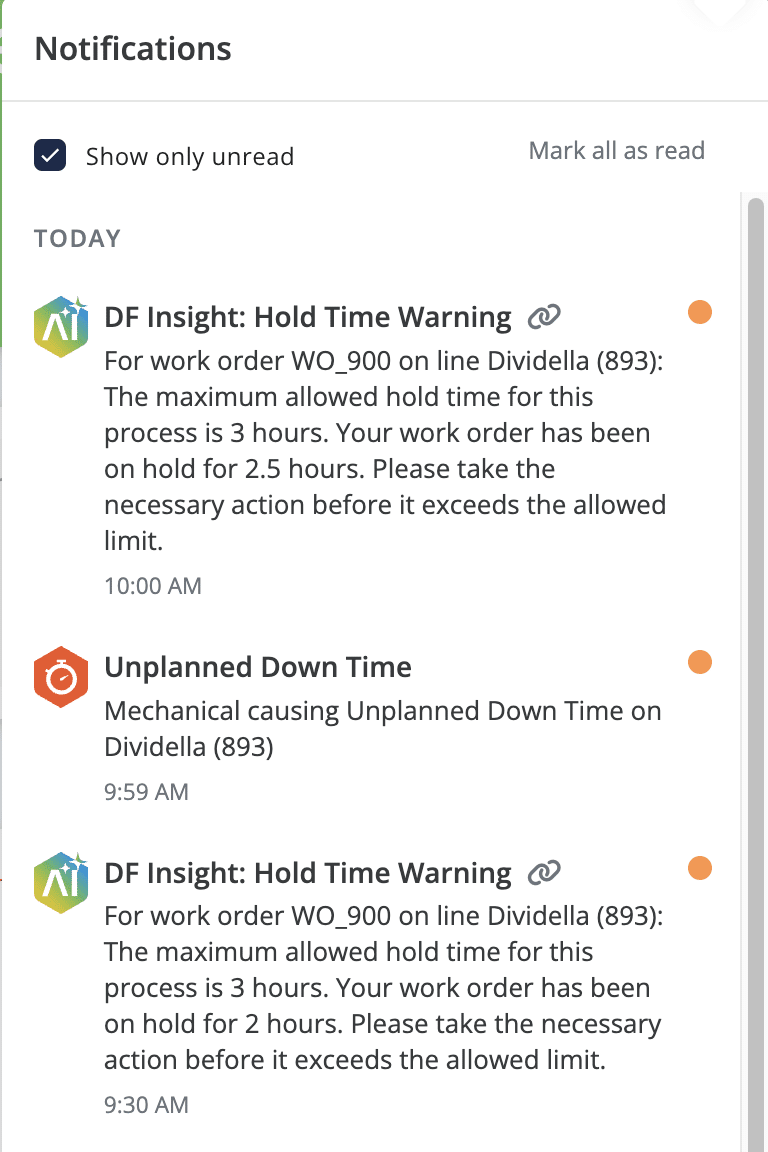
- Predictive Deviation and Trend Analysis: By comparing real-time operational data against long-term historical trends, AI models identify subtle performance drifts. If scrap rates, yield losses, or rework hours on a specific line begin to rise above baseline levels, the system flags the variance and recommends a targeted root-cause analysis to resolve minor process shifts before they become major bottlenecks.

To learn more about how AI is transforming pharmaceutical manufacturing and how to prepare your plant for this shift, download our free executive report: A Complete Handbook on AI in Pharma Manufacturing: Potential, Applications, Readiness, and Best Practices to Outperform the Competition.
Automation Technologies and QbD
Advanced automation forms the physical execution layer of a QbD-driven plant, connecting environmental and equipment sensors with PLCs, SCADA systems, and other industrial communication layers.

- Environmental Control Loops: If cleanroom temperature or relative humidity drifts outside validated parameters, automated feedback loops instantly trigger HVAC adjustments to restore target conditions without human intervention.
- Differential Pressure Management: Automated airlocks adjust airflow and pressure differentials dynamically in response to door openings, maintaining sterile containment zones during material transfers.
- Closed-Loop Process Tuning: In continuous manufacturing lines, real-time Process Analytical Technology (PAT) sensors, such as near-infrared probes, can provide continuous moisture or blend-uniformity measurements to control systems. Within an established control strategy, these signals can be used to automatically adjust feeder rates, impeller speeds, or liquid feed rates in real time.
QbD and Regulatory Compliance
Regulatory authorities such as the FDA and EMA support science- and risk-based approaches to pharmaceutical development and manufacturing, with QbD principles reflected in the ICH Q8–Q12 framework. By embedding process understanding, risk assessment, and control strategies into manufacturing, QbD helps companies establish a more consistent and demonstrable state of control.
Operating within an approved Design Space can provide regulatory flexibility, allowing certain process adjustments within approved boundaries without requiring a post-approval submission, provided applicable regulatory requirements are met. This can simplify inspection readiness, reduce manual compliance activities, and support faster batch review and release through more complete and traceable process data.

Digital Factory Platform and Quality by Design
Operationalizing Quality by Design requires a unified digital foundation rather than fragmented software solutions. Our Digital Factory Platform is a specialized, pharma-focused ecosystem that connects compliance, continuous process monitoring, and shop-floor execution into a single source of truth.
To help pharmaceutical manufacturers fully realize their QbD objectives, our platform integrates the essential tools needed for proactive process control:
- Digital Logbooks & Digital Batch Records: Enforce error-proofed data entry, ALCOA+ standards, and real-time CPP monitoring at the point of execution.
- Automation & IoT Integration: Capture streaming instrument data and dynamically manage cleanroom conditions and equipment states.
- Advanced Monitoring Analytics & AI Production Insights: Detect subtle process drifts, prevent hold time violations, and protect CQAs before deviations occur.
Ready to accelerate your QbD journey? Contact our team of experts to discover how we can support your quality objectives.
Or book a demo to see the Digital Factory Platform in action.