Downtime in Manufacturing: A Practical Guide to Calculation, Cost, and How to Reduce It
Downtime in manufacturing is the largest and most persistent source of productivity loss across global industries. It directly impacts output, cost structure, delivery performance, and long-term competitiveness.
According to industry analysis, downtime costs the global manufacturing sector more than $1.4 trillion annually. For the average manufacturer, this translates to over 11% of total revenue lost due to downtime-related inefficiencies. At the same time, the cost of downtime in manufacturing is increasing faster than inflation, driven by rising labor costs, supply chain volatility, and higher energy and material prices.
Despite these realities, nearly 80% of manufacturers still cannot measure the cost of downtime in manufacturing accurately. This gap makes it difficult to identify root causes, prioritize improvements, and reduce downtime in a systematic way.
For a deeper and more practical framework, you can download the full handbook: “The Executive’s Handbook on Downtime in Manufacturing: Calculation, Cost, and Modernization Strategies” for free
Downtime in manufacturing refers to any period during scheduled production time when equipment, lines, or processes are not producing goods. It is one of the most critical drivers of inefficiency because it directly reduces available production capacity.
From a lean manufacturing perspective, downtime falls under availability losses, one of the three components of Overall Equipment Effectiveness (OEE). Unlike performance or quality losses, downtime eliminates production time entirely, making it a primary focus for operational excellence.
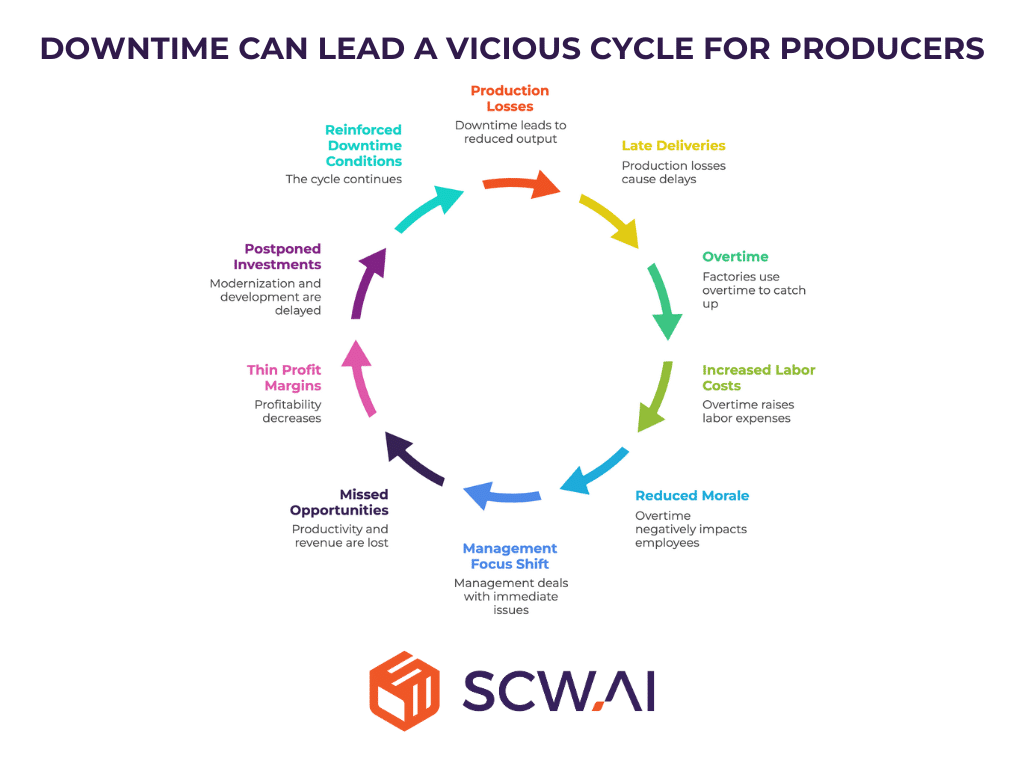
Manufacturing downtime has multiple root causes. Some are immediate and visible, while others are chronic and embedded in daily operations. When not addressed, downtime creates a reinforcing cycle. Production delays lead to missed delivery targets, which trigger overtime and increase costs. Managers shift into reactive firefighting, employee morale declines, and opportunities for improvement are missed. Over time, this results in thinner margins and reduced ability to invest in productivity improvements.
Manufacturing Downtime Categories: Planned vs. Unplanned
To manage downtime effectively, manufacturers must first classify it correctly. Manufacturing downtime is divided into two main categories: unplanned downtime in manufacturing and planned downtime in manufacturing.
This distinction is critical. Each category has different causes, cost implications, and improvement strategies. Without proper classification, manufacturers risk focusing on low-impact areas while ignoring the real drivers of inefficiency.
Unplanned Downtime in Manufacturing: The Primary Source of Loss
Unplanned downtime in manufacturing refers to unexpected events that interrupt production without contributing to quality, compliance, or efficiency. These disruptions are not scheduled and typically require immediate reaction, making them highly disruptive and costly.
Common causes of unplanned downtime in manufacturing include:
Machine failures
Material shortages
Power interruptions
And human errors in operations.
While machine-related issues are often the most visible, studies show that process inefficiencies and human factors can account for a significant share of downtime events.
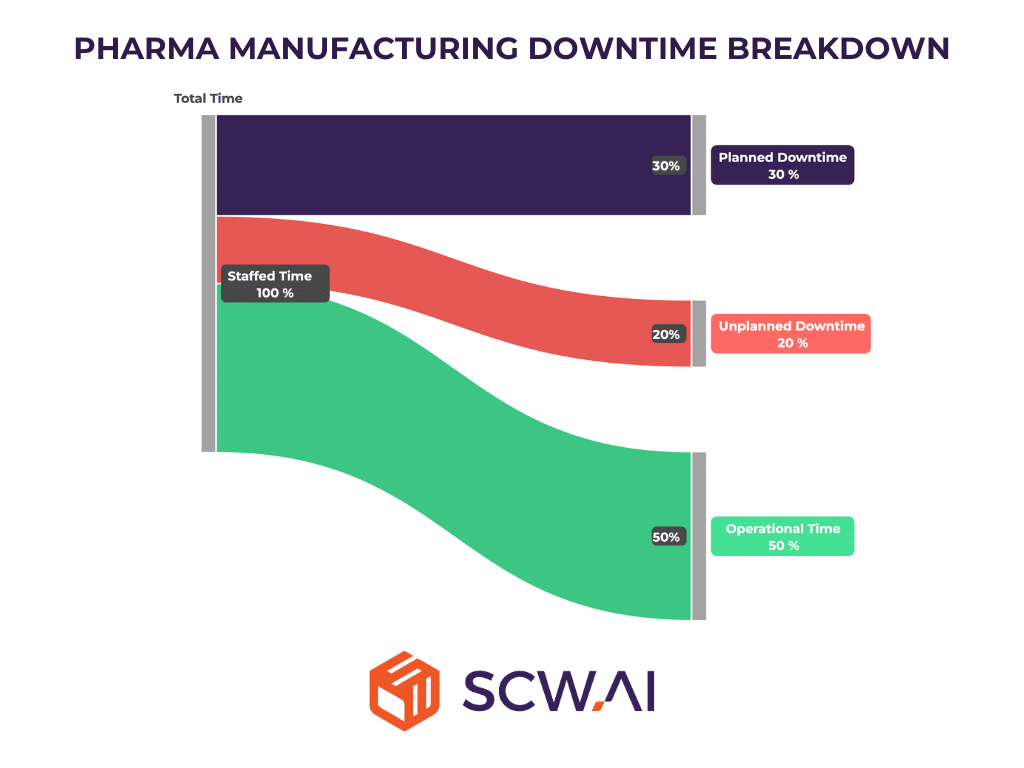
The impact of unplanned downtime is substantial. Around 60% of manufacturers report experiencing at least one unplanned downtime incident per month, while a smaller but critical group faces such disruptions on a daily basis. In industries like pharmaceuticals, unplanned downtime can account for as much as 20% of total production time, with a single failure capable of halting an entire line for a full week.
The financial impact is equally severe. The median cost of downtime can reach $125,000 per hour, and this figure continues to rise. Because these events are unpredictable, they also create cascading effects across scheduling, labor allocation, and customer commitments.
The goal for unplanned downtime is not incremental reduction but systematic elimination. Achieving this requires better maintenance strategies, improved planning, and, most importantly, real-time and actionable visibility into operations.
Planned Downtime in Manufacturing: Necessary but Optimizable
Planned downtime in manufacturing includes all scheduled or necessary interruptions required to maintain operations, ensure quality, and comply with regulations. Unlike unplanned downtime, these activities add indirect value but still reduce available production time.
In GMP regulated industries such as pharmaceuticals and beverage production, these activities are essential for compliance and product integrity.
The scale of planned downtime is often underestimated. In some industries such as pharma, planned downtime can account for 20% to 30% of total production time, with administrative processes such as paperwork alone consuming more than 10% of staffed time.
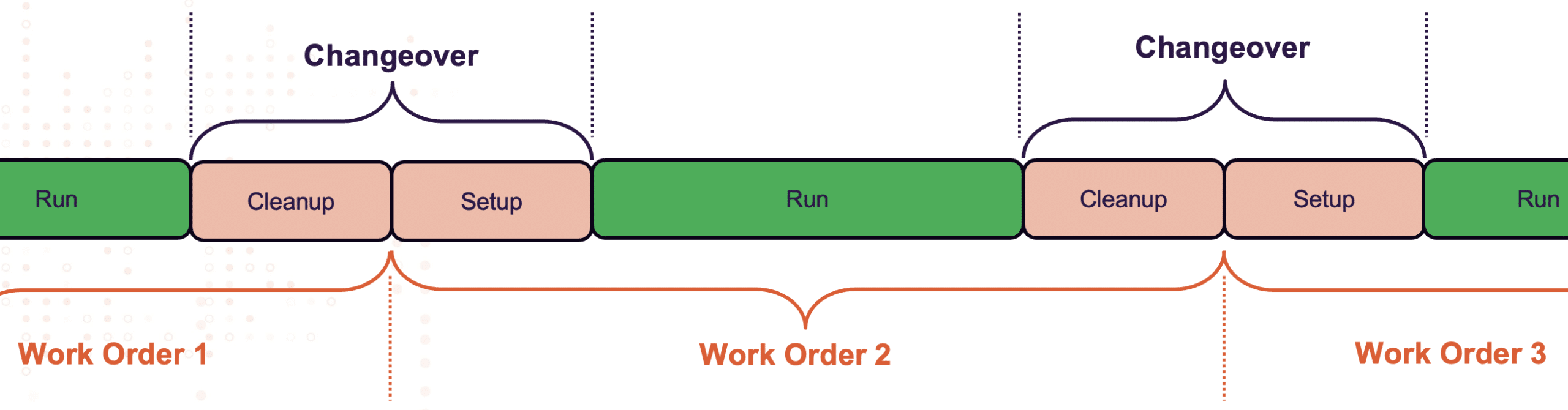
The key challenge is not whether planned downtime exists, but how efficiently it is executed. Poorly managed tier meetings, excessive changeover durations, and manual documentation processes can significantly extend these periods beyond what is necessary.
As a result, leading manufacturers focus on minimizing planned downtime through standardization, digitalization, and better scheduling, rather than attempting to eliminate it.
How to Calculate Downtime in Manufacturing
How to calculate downtime in manufacturing is essential for managing it effectively. Without accurate measurement and standardization, improvement efforts remain guesswork. Nowadays, manufacturing analytics make downtime calculation automated and real-time.
One of the most common way to calculate downtime is through availability, by utilizing OEE as a standard metric.
This way OEE works as a compass for manufacturers to track downtime effectively in different lines and factories.
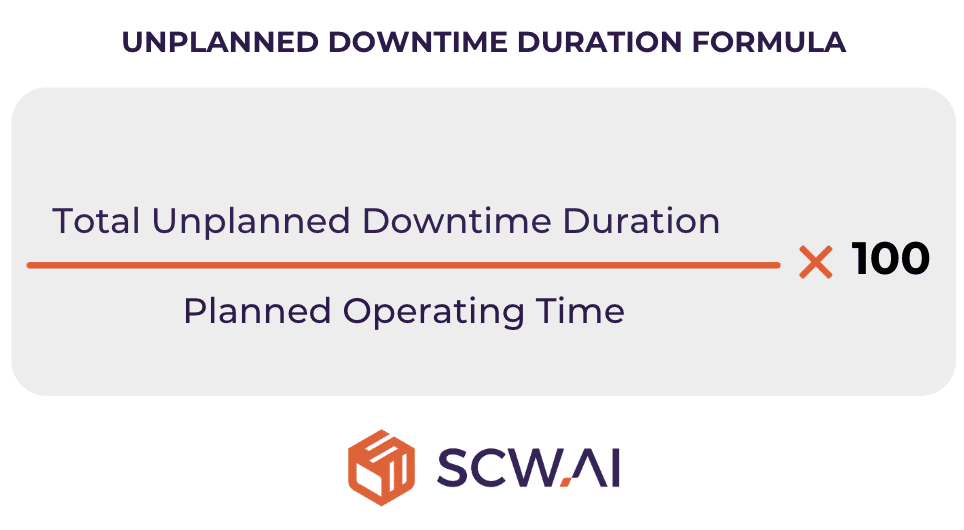
From this, downtime can be derived as:
Manufacturers also track additional metrics to understand downtime behavior:
Downtime Frequency: Number of downtime incidents in a given period
Mean Downtime Duration: Total downtime divided by number of incidents
These metrics provide insight into whether downtime is driven by frequent small issues or fewer large disruptions, which is critical for root cause analysis.
Manufacturing Downtime Statistics and Industry Benchmarks
Across industries, downtime remains the largest source of productivity loss. On average, manufacturers lose around 28% of their total production time due to downtime, making availability losses the dominant factor in operational inefficiency.
However, the composition of downtime varies by industry:
Pharmaceuticals:
Among the lowest-performing industries, with average OEE around 37%. Downtime can consume up to 50% of total time, driven by strict regulatory requirements, extensive cleaning, and paperwork.
Food and Beverage:
Downtime averages around 23%, but varies widely depending on product complexity. Simple packaging operations perform significantly better than complex processing environments such as diary products or brewing.
Cosmetics:
Experiences a higher share of unplanned downtime, often driven by variability in production processes.
These benchmarks highlight a key insight: while downtime exists in all industries, its drivers differ significantly, making tailored strategies essential. If you want to reach detailed information for industries mentioned here with richer data and visuals as well as for other industries, you can download our free handbook.
How to Calculate Cost of Downtime for Your Operations
Downtime in manufacturing affects financial performance, operational efficiency, and customer relationships.
Downtime generates three main types of costs:
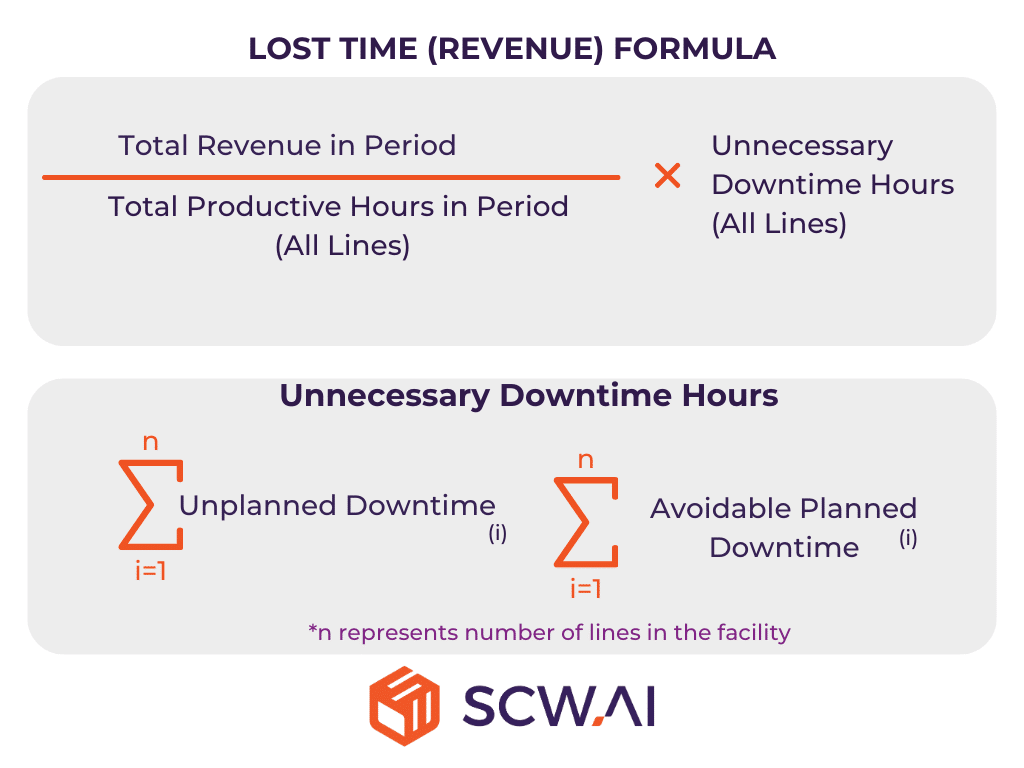
Lost Revenue: When production stops, manufacturers lose the opportunity to produce and sell goods. In high-demand environments, this represents direct revenue loss.
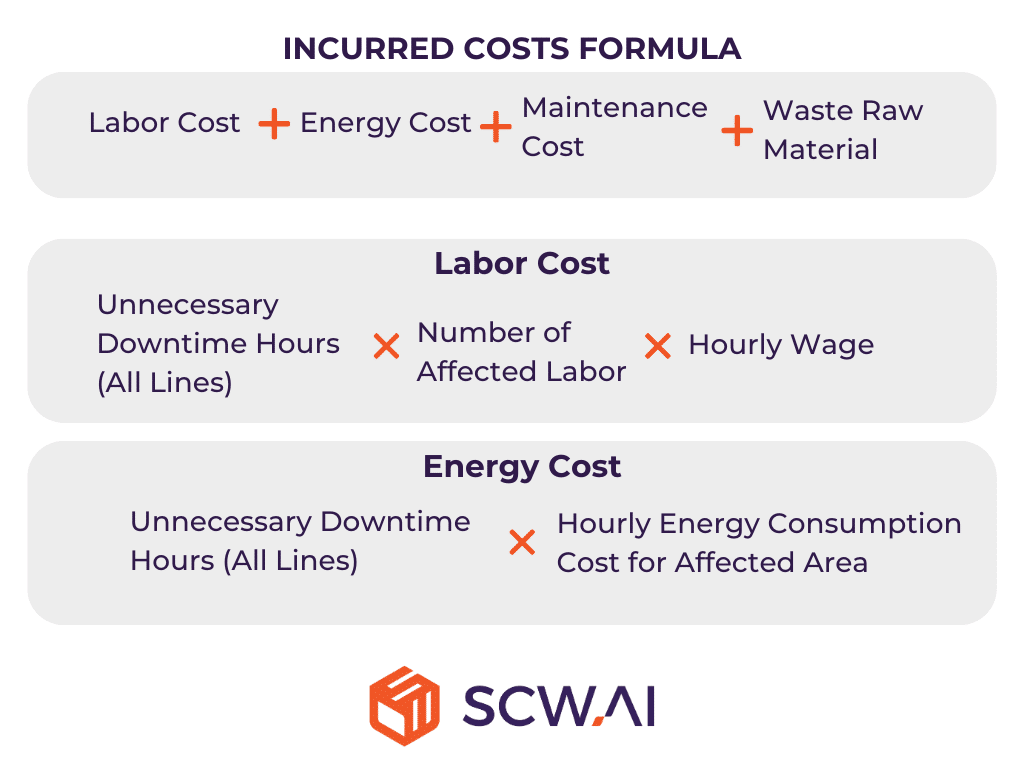
Incurred Costs: Even during downtime, companies continue to pay wages, energy costs, and maintenance expenses. These costs accumulate without generating value.
Recovery Costs: To compensate for lost time, manufacturers often rely on overtime, premium freight, or expedited production, increasing operational costs.
In recent years, these costs have increased significantly. Rising wages, supply chain disruptions, and geopolitical pressures have made downtime more expensive than ever.
Business Return of Downtime Minimization
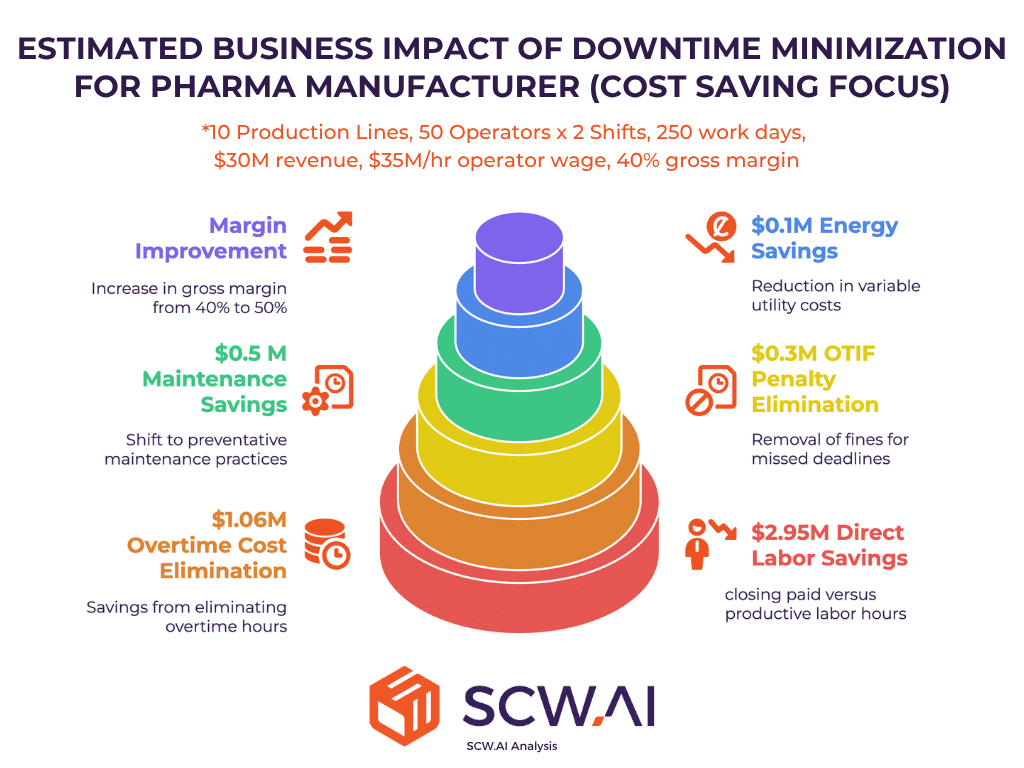
According to our analysis, in a typical 10 lines small pharmaceutical facility, business return of downtime minimization can lead into:
$20M+ in untapped revenue opportunity
$2M–$3M in direct cost savings potential
Significant margin improvement (e.g., from 40% to 50%+)
For more detailed analysis you can download our free handbook.
How to Reduce Downtime in Manufacturing with Industry 4.0 and Factory Modernization
Modern downtime reduction follows a clear logic: collect data, analyze it, and act on it consistently. This is often referred to as scientific shop floor management, and it transforms reactive operations into proactive systems.
Build a Real-Time Data Foundation
Manufacturers cannot improve what they cannot measure. Manual data gathering or traditional ways such as Excel reports provide historical insights but fail to prevent downtime as it happens (or better before happening).
A modern data foundation uses IoT devices, PLC integrations, and OPC systems to capture real-time production data. This allows manufacturers to detect issues immediately and respond before they escalate into larger disruptions.
Use Analytics for Root Cause Analysis
Once data is available, analytics tools help identify the true causes of downtime. Instead of relying on assumptions, manufacturers can analyze downtime by machine, shift, product, or operator. This level of detail enables more accurate prioritization and ensures that improvement efforts focus on the most impactful issues.
Improve Labor Productivity with Data
Labor inefficiency is one of the most overlooked causes of downtime. In many factories, there is a significant gap between paid hours and productive hours. By using labor analytics, manufacturers can monitor worker performance, identify skill gaps, and assign tasks more effectively. Aligning work with skill levels reduces errors, improves execution speed, and minimizes downtime caused by human factors.
Optimize Maintenance Strategies
Moving from reactive to preventive maintenance is one of the most effective ways to reduce unplanned downtime. By monitoring machine conditions and historical performance, manufacturers can detect early warning signs and intervene before failures occur. This approach improves equipment reliability.
Digitize Paperwork and Processes
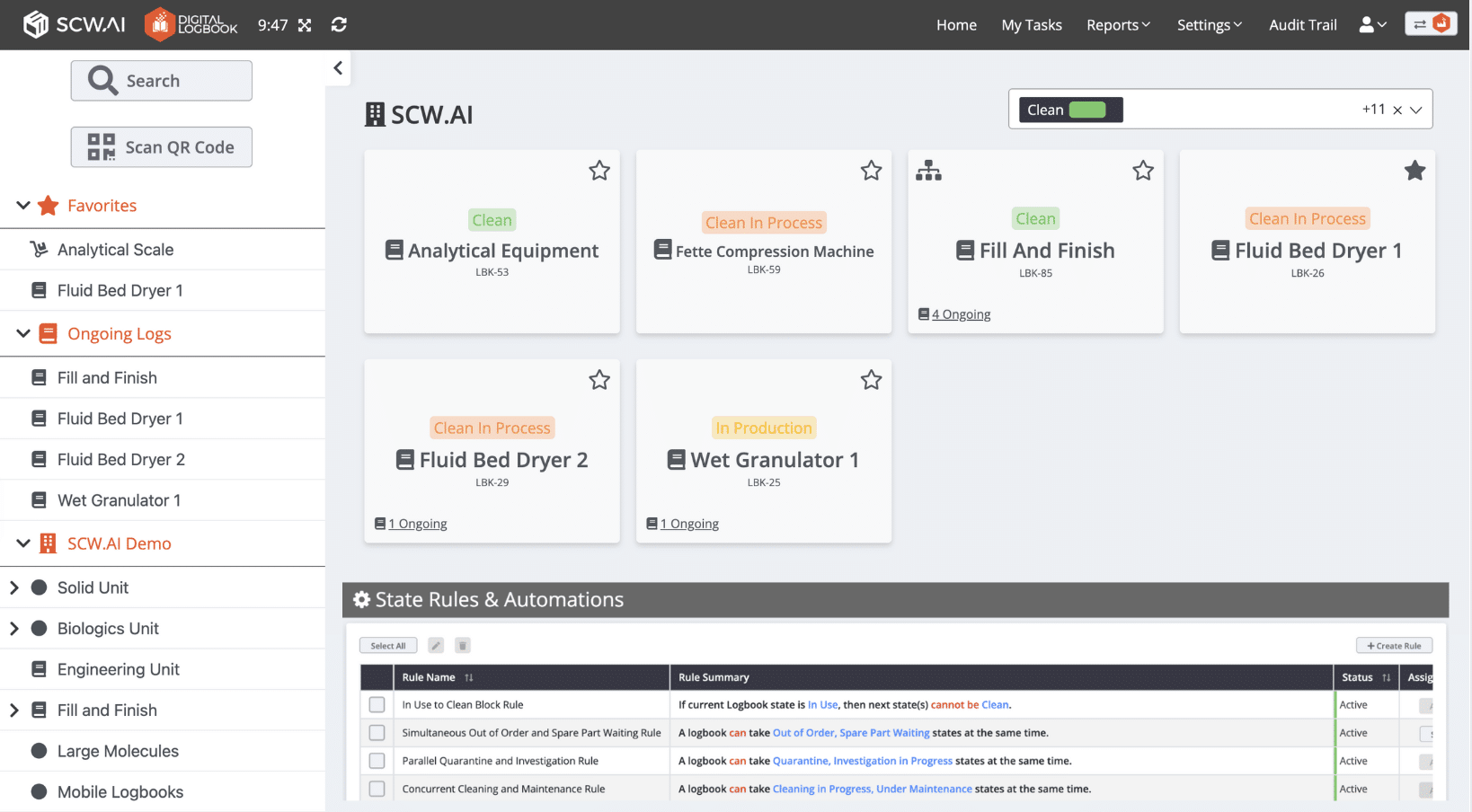
Manual documentation processes create delays and increase downtime, especially in GMP regulated industries. Digital Logbooks and Batch Recordsautomate data entry, approvals, and calculations, significantly reducing administrative burden. This not only improves efficiency but also enhances compliance and sustainability.
However, AI is not a standalone solution. Its effectiveness depends on digital maturity. Around 90% of manufacturers are still in the early stages of digital transformation, with limited access to high-quality, real-time data and data contextualization needed for reliable AI.
As a result, while AI offers significant long-term benefits, the immediate priority for most organizations is building the digital foundation required to support it. Once this foundation is in place, AI can amplify improvements and enable more advanced optimization.
Proven Downtime Reduction Success Stories by Global Leaders
World Economic Forum Lighthouse factories demonstrate what is achievable:
Up to 60% reduction in unplanned downtime
Up to 80% reduction in changeover times
30%+ improvements in productivity
Significant gains in cost, throughput and energy efficiency.
These results are consistent across industries and geographies, proving that downtime reduction through digital transformation is scalable and repeatable.
Download the Full Handbook: A Practical Guide to Downtime Reduction
This page provides a high-level overview of downtime in manufacturing, its categories, cost, and reduction strategies. However, effective downtime reduction requires deeper analysis, detailed calculations, and practical frameworks.
In the full handbook, you will find:
Detailed ROI models for downtime reduction
Industry-specific benchmarks and case studies
Step-by-step frameworks for factory modernization
Practical tools for measuring and reducing downtime
Download the full handbook to access the complete framework.
Fill out the form below to receive a free copy of the full report, “The Executive’s Handbook on Downtime in Manufacturing: Calculation, Cost, and Modernization Strategies“.